The AI Conversation Everyone Should Be Having
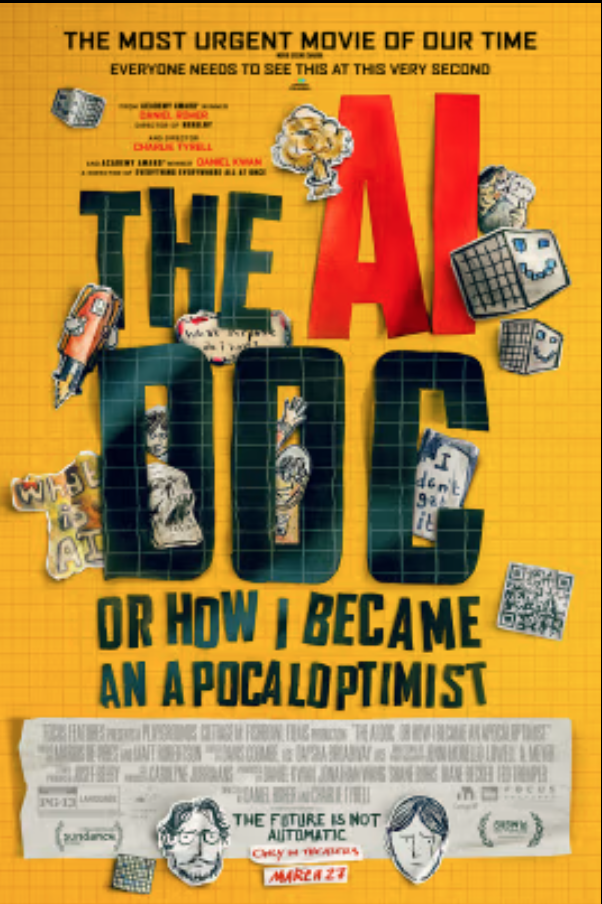
Few subjects are as easy to sensationalize as AI. So after years of writing and speaking about its deeper implications, I was genuinely curious what The AI Doc: How I Became an Apocaloptimist would make of it.
The trailer leans dramatic. It opens with someone describing the potential for AI to go “quite wrong,” and follows quickly with a researcher who says he knows people working on AI risk who don’t expect their children to make it to high school. If that is your first exposure to the film, you might expect a straight cautionary tale. But that framing is the filmmaker’s starting point, not his conclusion. He begins the film as a new father, gripped by anxiety, and works his way toward something more considered. That journey is part of what makes the film worth watching.
Who Is in This Film
The filmmakers assembled a lineup that is, frankly, extraordinary: Sam Altman, Dario and Daniela Amodei, Ilya Sutskever, Demis Hassabis, Yoshua Bengio, Eliezer Yudkowsky, Reid Hoffman, Peter Diamandis, Tristan Harris, and more than two dozen others. These are not commentators watching from the sidelines. Many of them are building the technology, working urgently to make it safer, or sounding alarms from inside the system. Hearing them in the same film, sometimes in alignment and sometimes in stark tension, makes for a rare and valuable conversation.
What the Film Gets Right
The film does not resolve the debate between optimism and concern. It holds both honestly, and that is its greatest strength.
On one side, the possibilities are genuinely staggering. AI tutors available to every child regardless of income. Healthcare diagnostics accessible to people who have never seen a specialist. Technologies that could expand healthy human lifespans by decades. The film invites you to take seriously the idea that we may be approaching a period of genuine abundance, where constraints that have defined human life for generations begin to loosen.
On the other side, the risks deserve equal seriousness. One exchange in the film captures this tension cleanly. When the filmmaker asks one of the most prominent figures in AI to promise him it will go well, the answer is direct: that promise is impossible. Am I hopeful? Yes. Am I confident it will go right? Absolutely not. That combination of hope and honest uncertainty is the intellectual position the film earns, and it is a more useful place to land than either alarm or reassurance.
Beyond the technology itself, the film raises what may be the most consequential question of all: what happens when a small number of actors, whether corporate or governmental, gain disproportionate control over AI? The geopolitical dimension is not abstract. The race to develop the most capable AI systems carries real consequences for who shapes the future, and the film names that plainly.
Two Things Worth Pausing to Consider
If you are new to this conversation, two dynamics in particular deserve your attention right now.
The first is employment. AI is not simply automating repetitive tasks. It is moving into knowledge work, creative work, and decision-making. The transition will displace roles faster than most people, or most institutions, are prepared for. That is not a reason to resist the technology. It is a reason to think seriously, now, about retraining, social support systems, and what meaningful work looks like in a world where AI can perform many functions faster and at lower cost than humans.
The second is governance. Democratic institutions, regulatory bodies, and legal frameworks were not designed for the pace at which AI is developing. The film points to AI-generated deepfakes that have already influenced elections in real time. That is not a hypothetical future scenario. The gap between what AI can do and what our governance systems can manage is widening, and closing it will require both political will and genuine public engagement. As the film makes clear, those pressures don’t wait for the policy process to catch up.
Where I Stand
I lean toward the optimistic view over the long arc. I explore that perspective in my book Soulful: You in the Future of Artificial Intelligence, which examines the human dimensions of what is ahead. But optimism about the destination does not mean the journey will be smooth. The transition period we are entering is likely to be genuinely difficult, and the outcome is not predetermined. It depends significantly on the choices we make now, as individuals, as organizations, and as societies.
As one of the interviewees put it, both sides of this debate are right, and neither goes far enough on its own. The promise and the peril are not separate stories. They are the same story.
My Encouragement to You
Whatever your current view of AI, whether you are curious, anxious, enthusiastic, or skeptical, I would encourage you to get educated and engage in the conversation. The stakes are too high for this to remain a discussion among technologists and specialists. An informed citizenry is not a luxury at this moment in history. It is a necessity, because the decisions being made now about how AI is built, deployed, and governed will shape the world that all of us, and our children, will inhabit.
Start by watching The AI Doc. Look past the trailer’s opening notes and give the film room to make its full argument. It is well balanced with both pessimistic and optimistic views, and the voices in it carry real weight. If you want to go deeper on what this transition means for the human experience, Soulful offers a companion perspective.
But above all, do not sit this conversation out. The future of AI is not a spectator sport.